
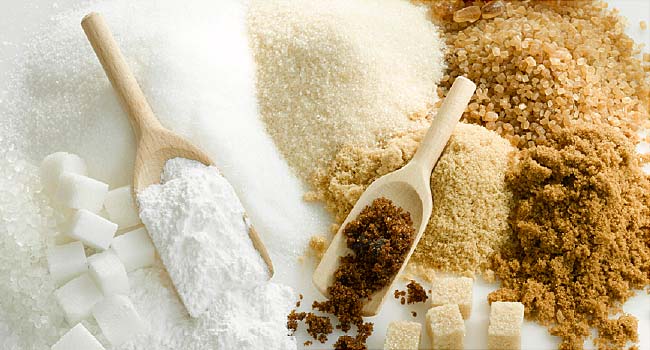
For the purposes of this , let’s both assume that we are talking about a situation that involves not cutting out sugar. We both agree that changing your palate to crave less sugary tastes and eliminating excess sugar from your diet will help you achieve any health, fitness or wellness goal. This is about alternatives when you feel like you cannot avoid it or have to have something sweet.
Calorie-Free Sweeteners
Stevia
Derived from the leaf of a South American shrub, this natural substance is up to 200 times as sweet as sugar. Stevia-based products like Truvia and Pure Via are made from a purified extract of the plant, called rebaudioside A (Reb A), and sugar alcohols.
Pros: It’s a natural sweetener that’s free of artificial chemicals. You also can use stevia in cooking and baking. There are few negatives to Stevia.
Cons: Although the U.S. Food and Drug Administration (FDA) approved the use of Reb A as a sugar substitute, the whole leaf and crude extracts – sold as supplements in health food stores – have not been approved. I have to say that although it is classified as a sugar substitute, it is still a natural product that is highly refined into a substance. Use with caution until all the long-term studies are actually complete.
Pure Maple Syrup
Boiling down the sap of a maple tree creates this caramel-colored liquid. The sweetener contains about the same amount of calories as sugar – 17 per teaspoon compared with sugar’s 16.
Pros: It contains minerals the body needs, like manganese and zinc. Plus it’s pretty delightful tasting.
Cons: Its distinct flavor affects the taste of drinks, dishes and baked goods, and not always in a desired way.
Agave
This liquid sweetener comes from the cactus-like agave plant. Its nectar is processed into syrup, which contains 20 calories per teaspoon.
Pros: Agave is lower on the glycemic index than other sweeteners, which means it doesn’t make blood sugar spike as high. The syrup also has a neutral flavor that works well in drinks and dishes. And because agave is about 50 percent sweeter than sugar, you’ll need less. But…
Cons: If you’re trying to cut back on processed foods, agave may not be the way to go. With all of that process, it means that it ends up affecting the body in a stronger way than sugar can. Because of the way that fructose is processed, the amount of Agave that you take in is equivalent to more than the same amount of sugar. The low glycemic index can be eliminated by the high liver impact that processing fructose can have on the body.
Honey
Made by bees from the nectar of flowers, honey contains 21 calories per teaspoon.
Pros: Honey is sweeter and thicker than sugar, so people tend to use less of it. It’s also a natural source of antioxidants, and swapping honey for sugar may keep LDL, or “bad,” cholesterol levels from rising, according to a 2009 study in the Journal of Medicinal Food.
Cons: Honey should not be given to babies younger than 12 months because their immune systems aren’t strong enough to fend off potential contaminants in this natural product. However, when used in cooked foods, the risks of botulism and other components tend to be lessened when the honey is brought to a boiling point of cooked food. IT has a very distinct flavor that some people find very off-putting.
Now, the above ones are termed “natural” and I view them as acceptable as far as a substitute goes. However, use with caution. I am adding these next two to the list simply to show how horrible they are. These need to be avoided. If you must have something sweet using chemicals is not a good idea.
Aspartame
Found in diet drinks, sugar-free gum and those blue packets, this synthetic sweetener is sold under the brand names Equal and NutraSweet.
Pros: Introduced in 1981, aspartame is one of the most studied sweeteners on the market. Yay, for research.
Cons: Heat can break down aspartame, which creates a bitter aftertaste, so avoid cooking with it. Keep in mind that the chemical breakdown point of aspartame is right at 89 degrees. So, if you think about it, your body is a higher temperature than that, so it breaks down in the body into its component parts. Also, aspartame can trigger headaches or stomach discomfort in certain people, in some sensitive people, it can trigger an inflammatory response as well. This stuff is linked (anecdotally, not confirmed through the short-term studies, long-term studies have been inconclusive). This stuff is bad.
Sucralose
Also called Splenda, and sold in yellow packets, it’s made from a chemically tweaked version of sugar that isn’t absorbed by the body. The processed sweetener is used in a bevy of products, such as soft drinks, cereals and baked goods.
Pros: Because sucralose can withstand heat, you can use it for cooking and baking. “It doesn’t provide the same consistency or color as sugar,” says registered dietitian Bethany Thayer, director of the Center for Health Promotion and Disease Prevention at Henry Ford Health System in Detroit. In other words, cookies will turn out thinner and paler.Splenda Sugar Blend, a mixture of sugar and sucralose, may produce better results.
Cons: Although the components in Sucralose can withstand the heat of cooking, it is also true that it can withstand the heat and processes of the body. So, conversely to Aspartame, it will not break down in the body, for anything. The substances in sucralose that can breakdown through enzymatic processes have been linked to increased boy pH and inflammation. Like aspartame, sucralose can lead to headaches, digestive issues and an increased insulin response in the body. Like Aspartame, I hate this stuff and call it bad. Don’t Use it.
So there you go. There is some information on sweetening food. Use natural if you have to sweeten things. I have a preference for honey and maple when it comes to sweeteners.
 The Healthy Us