Trophology . . . What??

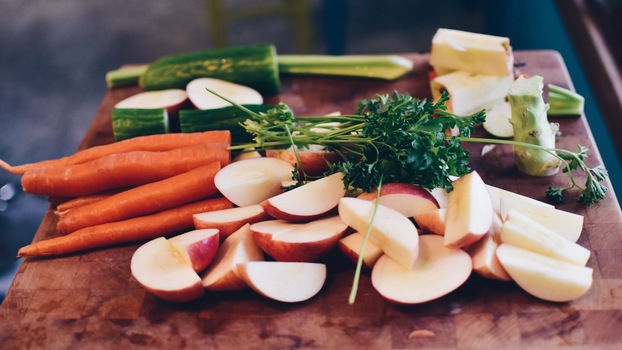
pexels-photo-41123-mediumTrophology is the study of correct food-combining, that is, the art of knowing which foods go best with which others. Foods can be grouped according to their main constituents as follows:
  • Carbohydrates:
    • Starches – rice, millet, pasta, corn, bread, flour, potatoes, bananas, squashes
    • Sugars – cane sugar, honey, malt, syrups, fruits:
    • Acid fruits – tomatoes, citrus (lemons, limes, oranges, pineapples, grapefruits), strawberries, cranberries
    • Sub-acid fruits – melons, apples, pears, peaches, plums, grapes, cherries, raspberries, blackberries
    • Sweet fruits – dried dates, figs, raisins, bananas, prunes, pawpaw
  • Proteins – nuts, seeds, pulses, beans, milk, yoghurt, cheese, fish, meat
  • Fats – peanuts, olives, oils, butter, cream, animal fat
  • Vitamins and Minerals:
    • Vegetables and salads – onions, broccoli, courgettes, peas, carrots, celery, lettuce

The process of digestion has nine basic rules which describe combinations to avoid:

  1. Carbohydrate + Carbohydrate
  2. Carbohydrate + Acid Fruit
  3. Carbohydrate + Protein
  4. Carbohydrate + Sugar
  5. Protein + Acid Fruit
  6. Protein + Protein
  7. Protein + Fat
  8. Melon + any other food
  9. Milk + any other food

Proteins are digested by the enzyme pepsin in the stomach, which only works in the presence of hydrochloric acid (HCl). (Note this is different from the acid in acid fruits, which impede protein digestion.) Different concentrated proteins require secretions of very different digestive juices, so one should only eat one kind of protein (and likewise only one starch) at a time. However, since most foods contain small amounts of protein, we ignore it in combinations, the rules for combining foods applying only to the concentrated starches, sugars, fats and proteins.

Starches, on the other hand, require an alkali medium and the amylase in saliva which contains ptyalin, an enzyme which breaks down starch into maltose. The process continues in the small intestine, where more amylase further breaks down the maltose into simple glucose, fructose and galactose. These are absorbed into the bloodstream, and taken to the liver, which dispenses the energy to whatever cells in the body need it. If there is no immediate requirement, the glucose will be converted to glycogen and stored in the liver, or into fat to be stored in adipose tissue.

So consuming proteins and starches together will result in each being impeded by the other. Similarly, the eating of sugars and acid fruits impede the action of ptyalin and pepsin, reducing the secretion of saliva, and delaying digestion. If insufficient amylase is present in the mouth (due to insufficient chewing, or too much sugar), any starches will not be digested at all in the stomach, instead clogging up the works until amylase in the small intestine can get to work on it.

Fats impede the secretion of digestive juices, and reduce the amount of pepsin and hydrochloric acid, so they should be avoided or used sparingly with protein-rich foods.

Vegetables and salads combine well with all food types.

Acid fruits clash with most things, so are best eaten on their own; melons also, a special case, which should never be combined with other foods. Sub-acid fruits are easier to mix with other types in moderation, but all fruits are digested not in the stomach but the intestine, so will just slow things down (and ferment) until they get there. This is why a purely fruit diet is so beneficial to health (especially when one is ill), there being no starches or proteins to impede the fruits which pass quickly through the stomach to the intestine.

This may all sound contrary to our ‘conventional’ habits, until one realises that the sandwich and the hamburger are modern inventions. However, consider a sliced-lemon sandwich, or melon with millet, or pineapple with almonds, or pasta with potatoes and tortillas, and see how appetising they sound; instinctively upsetting no doubt, although we think nothing of pouring lemon juice on salad to accompany (destroy) our crusty baguette. Milk is best taken alone or left alone.

In Practice…

I tried eating separate meals of proteins and carbohydrates for a while, but found it quite hard to maintain a satisfying diet this way, probably due to years of ingrained eating habits. (Having written this article I shall certainly try some more experiments now I am a bit wiser.) Studies on young children, however, show that given the choice of a wide range of foods of all kinds, at first they try a bit of everything, to find what they like.

Eventually they settled into a pattern of eating only one or two foods at a time, say lots of beetroot, or lots of fish, and ignored sweets in favour of slow-release carbohydrates such as potatoes and rice. If one thinks about our prehistoric hunter-gatherer ancestors, they would probably eat whatever food they found, be it grains or fish or a handful of nuts or fruits.

I think it is important to not get too obsessed with finding the perfect diet straight away, because our needs change throughout our lives and depend on age, climate, exercise and other factors. It takes a lot of experiential study to find what suits you and what you enjoy. Bear these trophological issues in mind, but don’t feel constrained by them. The most important thing is to eat a balanced diet which includes plenty of slow-release carbohydrates from whole-grains, protein from pulses and seeds, fibre from fresh fruit and veg, and little or no sugared or processed food. If you’re wanting to lose weight, then the ideas presented here may be helpful, but really the best way to lose weight is to get plenty of exercise and eat a healthy, balanced diet, as:

A diet rich in fresh fruits and vegetables and plenty of fibre seems to help protect against bowel cancer and there is evidence that a diet containing much meat may increase the risk.


This article was lifted directly from an old article from 2004.  I attempted to get in touch with the original author, but to no avail.  I left the British/Canadien  spellings in it.  I thank Malcolm Smith for this timeless information.
Eating for Health, Not for. . .

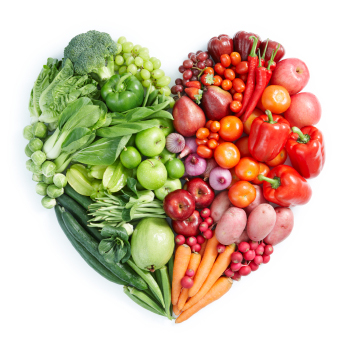
heart shape by various vegetables and fruits

Something that comes up often in conversations with others is goals and accomplishments.  This conversation is a good one to have with yourself, and with someone else you are being accountable to.  We all know that having someone to be accountable to is a great idea and will help you accomplish your goals with your “diet”  (For the record, I hate that word, dieting is a fad, lifestyle change is what we should strive for.)  But for the sake of this article, we will use that horrible, terrible word as a catch-all for what you’re doing.

First, it is not reasonable to expect busy adults to actually count calories or measure out grams of protein or carbs or fats.  If you have time for that, then more power to you.  Most people will not take that kind of time to do that, they will want something that fits into their lives without actually disrupting their lives on such a scale.  Now, that is not to say that you need to just throw caution to the wind and eat whatever you want, but it’s less stressful than you think it is.  Here’s how:

  • Start reducing your fast carbs that do not accomplish anything.  By these I mean the following, and in this order:  White Bread, White Rice, Bleached Grain products (think pastas), White Potatoes, Whole Wheat Bread, Heirloom Grains, Brown Rice, Whole Grain Breads, Whole Grain products (think whole grain pastas), etc.  The reason to remove these and in that order is simple.  White Bread has little to no nutritional value.  They fortify it during the process of making it, prior to the baking process (which basically extracts all the fortified nutrients that they add) and it has little nutritional value.  Basically, if you take a small piece of white bread and chew it up, and then chew it a little longer, you will notice that it will get sweet in your mouth, there is a reason for that.  It’s basically sugar.  Also, if you eat white bread now, switch to wheat bread.  It is not perfect and if you could greatly reduce bread in general, that would be better, but switching from a “white” grain to a colored grain is a start.
  • Increase the colored carbs that you don’t think about.  Vegetables are carbs.  That is true, but the amount of fiber in most vegetables neutralizes the carb load you experience when you eat them.  For example, look at a carrot.  People will scream about the amount of sugars in a carrot, forgetting that it digests so slowly due to the fiber that your insulin response can easily respond in such a way that you do not immediately store it as fat.  Vegetables are also your best source of overall nutrition in your diet.  If you are being encouraged to eat fewer vegetables and you are over the age of 30, you need to question this.  Lettuce, spinach, kale, broccoli, celery and cauliflower are very close to calorie-even when you get down to it.
  • Satiety is the most important factor to a successful food plan, regardless of how complex or simple it is.  If you are hungry all the time, you will stray.  The importance of being able to eat without it feeling like a task is the key.  You can do this by eating protein throughout the day, but more importantly, keep your stomach full and you will be happy.  The easiest way to do this is to drink a lot of water.  I am not saying replace your meals with water, that is crazy.  But if you drink water throughout the day, your stomach will stay full and you will have better success.  Eating vegetables throughout the day is also helpful.  I get funny looks all the time at work for my “garden bin” that stays out at my desk for the whole night.  It is a 1/2 gallon plastic container that I fill with mini-peppers, carrots, celery and whatever.  I snack on it the whole night.
  • Most importantly there is a key thing to remember.  You are going to stray.  You are going to pass up someone who has a container of chocolate covered something or other and have a couple.  Don’t beat yourself up about it.  It is not the end of the world.  Look at everything else you changed in the day.  If you eat a crapload of veggies during the day, your body has already won the battle.

The important thing about what you are doing is that you are consciously trying to increase your health.  Contrary to what articles say the research out there supports health over weight loss.  Firstly, one leads to the other, that is a fact.  If you replace McDonald’s’ with celery, you are going to lose weight.  But more importantly, you are going to have a few positive changes that will occur.  You will get nutrients that your body craves.  You will get the fiber your body craves.

Second, nobody wants to take the time to measure things out and do complex calculations about glycemic index and glycemic load to figure out what the best thing to do is.  An easy way to look at it, taking protein as the example, is this:  If you are not trying to be a body builder in your spare time, you are probably taking in too many carbs and too much protein.  When you look at a chicken breast that you just cooked, there you go.  Not two, not three, not a small bite of another one.  Just that one.  When you are given a choice between the 1/2 pound burger and the 1/3 pound burger, choose the smaller one.  Then don’t put bacon on it.  These are the kind of things that are easy to do.  Sensible even.  Better yet, split it with someone else at the table that way you can get the big burger and add the bacon to it.  Don’t get fries, get a salad.  Don’t drink soda, better yet, drink water.  You have just taken a carby-meat meal of about 1200 calories and changed it to about 450 calories and you did not suffer any kind of loss or denial of what you think you crave.  My wife would kind of chuckle when we went to a steak house because I would order a steak and two house salads.  What?  I like salad and I did not want a potato.  4 years ago, it would have been different, but now, I crave salads.  Simplify things in your “diet” and you will find that you make better food choices.

Third, I will always argue that you should be eating for health and not for any other reason.  There are lots of terrible ideas out there that are there to take money and self-esteem away from people.  If they are eating a food plan that subscribes to a food plan and does not subscribe to a lifestyle change, they are barking up the wrong tree.  If you do not change your habits, change your ideas and change your lifestyle, you will not achieve what you are trying to achieve in your goals for your body.

As always, if you have questions or comments please comment below.  If you need help with these types of choices and decisions, we run an all online class that lasts 12 weeks and starts every 2 weeks.  If you need help, it’s here.


Sugar or Not-Sugar (for Health)

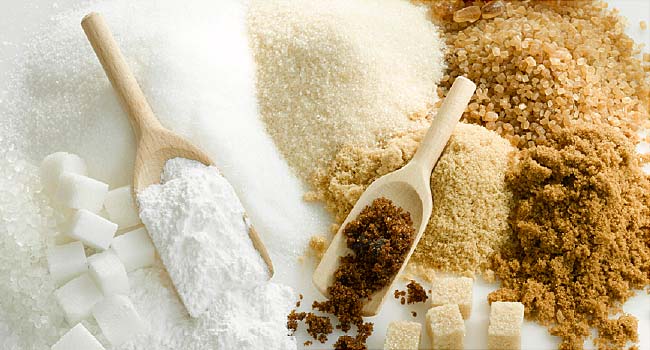
various types of sugar

For the purposes of this , let’s both assume that we are talking about a situation that involves not cutting out sugar.  We both agree that changing your palate to crave less sugary tastes and eliminating excess sugar from your diet will help you achieve any health, fitness or wellness goal.  This is about alternatives when you feel like you cannot avoid it or have to have something sweet.

Calorie-Free Sweeteners

Stevia

Derived from the leaf of a South American shrub, this natural substance is up to 200 times as sweet as sugar. Stevia-based products like Truvia and Pure Via are made from a purified extract of the plant, called rebaudioside A (Reb A), and sugar alcohols.

Pros: It’s a natural sweetener that’s free of artificial chemicals. You also can use stevia in cooking and baking.  There are few negatives to Stevia.

Cons: Although the U.S. Food and Drug Administration (FDA) approved the use of Reb A as a sugar substitute, the whole leaf and crude extracts – sold as supplements in health food stores – have not been approved.  I have to say that although it is classified as a sugar substitute, it is still a natural product that is highly refined into a substance.  Use with caution until all the long-term studies are actually complete.  


Pure Maple Syrup

Boiling down the sap of a maple tree creates this caramel-colored liquid. The sweetener contains about the same amount of calories as sugar – 17 per teaspoon compared with sugar’s 16.

Pros: It contains minerals the body needs, like manganese and zinc.  Plus it’s pretty delightful tasting.  

Cons: Its distinct flavor affects the taste of drinks, dishes and baked goods, and not always in a desired way.

Agave

This liquid sweetener comes from the cactus-like agave plant. Its nectar is processed into syrup, which contains 20 calories per teaspoon.

Pros: Agave is lower on the glycemic index than other sweeteners, which means it doesn’t make blood sugar spike as high. The syrup also has a neutral flavor that works well in drinks and dishes. And because agave is about 50 percent sweeter than sugar, you’ll need less.  But…

Cons: If you’re trying to cut back on processed foods, agave may not be the way to go. With all of that process, it means that it ends up affecting the body in a stronger way than sugar can.  Because of the way that fructose is processed, the amount of Agave that you take in is equivalent to more than the same amount of sugar.  The low glycemic index can be eliminated by the high liver impact that processing fructose can have on the body.  

Honey

Made by bees from the nectar of flowers, honey contains 21 calories per teaspoon.

Pros: Honey is sweeter and thicker than sugar, so people tend to use less of it. It’s also a natural source of antioxidants, and swapping honey for sugar may keep LDL, or “bad,” cholesterol levels from rising, according to a 2009 study in the Journal of Medicinal Food.

Cons: Honey should not be given to babies younger than 12 months because their immune systems aren’t strong enough to fend off potential contaminants in this natural product.  However, when used in cooked foods, the risks of botulism and other components tend to be lessened when the honey is brought to a boiling point of cooked food.  IT has a very distinct flavor that some people find very off-putting.  

Now, the above ones are termed “natural” and I view them as acceptable as far as a substitute goes.  However, use with caution.  I am adding these next two to the list simply to show how horrible they are.  These need to be avoided.  If you must have something sweet using chemicals is not a good idea. 

Aspartame

Found in diet drinks, sugar-free gum and those blue packets, this synthetic sweetener is sold under the brand names Equal and NutraSweet.

Pros: Introduced in 1981, aspartame is one of the most studied sweeteners on the market.  Yay, for research.  

Cons: Heat can break down aspartame, which creates a bitter aftertaste, so avoid cooking with it.  Keep in mind that the chemical breakdown point of aspartame is right at 89 degrees.  So, if you think about it, your body is a higher temperature than that, so it breaks down in the body into its component parts.  Also, aspartame can trigger headaches or stomach discomfort in certain people, in some sensitive people, it can trigger an inflammatory response as well.  This stuff is linked (anecdotally, not confirmed through the short-term studies, long-term studies have been inconclusive).  This stuff is bad.  

Sucralose

Also called Splenda, and sold in yellow packets, it’s made from a chemically tweaked version of sugar that isn’t absorbed by the body. The processed sweetener is used in a bevy of products, such as soft drinks, cereals and baked goods.

Pros: Because sucralose can withstand heat, you can use it for cooking and baking. “It doesn’t provide the same consistency or color as sugar,” says registered dietitian Bethany Thayer, director of the Center for Health Promotion and Disease Prevention at Henry Ford Health System in Detroit. In other words, cookies will turn out thinner and paler.Splenda Sugar Blend, a mixture of sugar and sucralose, may produce better results.

Cons: Although the components in Sucralose can withstand the heat of cooking, it is also true that it can withstand the heat and processes of the body.  So, conversely to Aspartame, it will not break down in the body, for anything.  The substances in sucralose that can breakdown through enzymatic processes have been linked to increased boy pH and inflammation.  Like aspartame, sucralose can lead to headaches, digestive issues and an increased insulin response in the body.  Like Aspartame, I hate this stuff and call it bad.  Don’t Use it.   

So there you go.  There is some information on sweetening food.  Use natural if you have to sweeten things.  I have a preference for honey and maple when it comes to sweeteners.  

Some thoughts on “Being Happy”!

Being happy is not always what you think it is.  Sometimes people who are actually quite unhappy put on a facade that can leave you wondering how in the world they can be going through so much and still be smiling.  Sometimes these people cling to the brief periods of happiness in their day, only to return to a majority of the rest of their day being quite horrible.  You never know.  And therefore, you should never judge.

However, this article is not about the hidden pain that everyone experiences during various parts of their life.  It is actually about how to increase that period immensely by doing some quite easy things.

  1.  Explain to yourself that everyday is a new day and a new opportunity to be happy.  This sounds easy, and, it actually is.  When you wake up in the morning (whenever that is), how do you greet your day?  Do you groan, hit the snooze and hope it goes away.  A lot of people do.  A better choice is to not hit the snooze and begin your day with a burst.  On the days that I wake up alone, I typically hear my annoying alarm, and open my eyes, then fling the covers off of me.  This single, quick little burst of energy just improves everything.  If you do it right, you will chuckle to yourself at how ridiculous you did was.  Now you raise your head, look at the mess you just made of the covers and realize that you may as well get up, considering you have to make the bed again anyway, and hell, just do it.  Some people like to bound out of bed in a leap and land on their feet.  These people do not have a 4-year-old who leaves Legos around everywhere.  I did that once.

2.  If you have a spouse or children, hug them.  For what will seem like an uncomfortable amount of time.  Studies show that the full therapeutic effect of touch and closeness to someone you feel connected to for 25-30 seconds releases a cascade of stuff into your body that instantly improves your day.  The release of Oxytocin (yes, guys, that Oxytocin) produces a feeling of connection to that other being.  There is a release of endorphins.  There is an increase in blood flow to the arms, shoulders, chest and head (all of the parts touching during a good hug) which raises ambient body temperature between the two people.  Ever wonder why people hug when they are consoling someone, it’s because of all this.  It isn’t the “there, there” or the “it’s ok” that improves things, it is the actual contact.  So, hug someone you have a connection to.  Avoid hugging people who you do not hug usually.  Although it may make you feel better, they may call the cops.  And do not hug the cops when they get there.

3.  Eat something in the morning that doesn’t break down in your system in 10 minutes.  Avoid starchy cereals, sweet things like donuts and other useless crap.  Eat some protein with something fibrous that has natural sugar in it.  If you speak food then you know I mean fruit and some sort of protein.  A perfect breakfast, since you are eating every couple of hours anyway, is 1/4 cantaloupe, 4 ounces of strawberries, etc with 2 ounces of raw almonds.  Make a damn smoothie filled with fruit and veggies.  These items provide an awesome burst of energy without providing a sugar rush that will cause you to crash in 30 minutes.  You do not want to make yourself full, but you don’t want to eat, then leave the house basically immediately thinking about what Samwise called “Second Breakfast”.

4.  Finish something you start, early.  What I mean by this is accomplish something early in the day.  I still have issues with this.  There is nothing more depressing and saddening than to find out that you wasted the first few hours of the day on meaningless crap and have nothing to show for it.  Accomplish something early and the rest of the day is still a win.  Later, when you master this, change it to do the hard things first and the rest of your day is cake.

5.  Most importantly, be nice.  That’s right, be nice to people around you.  Be extra nice.  Give money to a homeless person (if that’s your thing), pay for the Starbucks of the person behind you, compliment the first four people you see with sincere compliments, stop and talk to the guy emptying the trash in your office, etc.  I should not have to tell you what something nice is.  It’s different for everyone.  This one simple act will cloud your day with an impenetrable layer of awesome.  You will find that it makes you feel better, and you will definitely make an impression on someone.  You will brighten someone else’s day.  Their brighter day will shine a bit on you and your day, which will make your day a bit better.

Happiness is something that some people just seem to go for and accomplish naturally.  Some of you that know me are aware of big changes happening in my life, and sometimes it affects me.  But I have to tell you, I am overall a happy person who loves their life.  I am truly happy to be alive and truly happy to be able to affect others around me in a positive way.  It would be easy to be a sour grouchy bastard all the time.  But, that is not acceptable as a human on this planet.  The entire world is filled with people who are out to make you unhappy.  Why do their work for them.  Give them a task and make them work to make you unhappy.  You never know, they might give up and be happy with you.

Preparation for Cleanse/Reset/Detox

[Updated 4/13/16, in the middle of the night]

It is near tax-day, so time for a cleanse.

The importance of prepping for your week cannot be overstated when you are trying to navigate a new clean eating regimen, detox or cleanse.  The old saying goes that “those who fail to prepare only prepare to fail” and I can personally vouch for that moniker as truth.  It is a simple statement to say but a nice mantra to take to heart.

We are starting a new cleanse on 4/25 and I am already preparing for our grocery trip.  I am making lists, thinking of recipes, considering containment devices, all to plan on success in this cleanse.  Cleansing and resetting your diet is a simple way to get back on track and usually forces you to question why you got off track in the first place.  Typically, I know that it is time to cleanse again when I start getting some random pains in my joints and have some more exciting and noteworthy stomach rumblings.  These are signs that I have started to put things back in my diet that I know I shouldn’t and have subtracted things from my diet that I should have kept.  My ankle started to hurt the other day and it made me realize that I needed to take care of some things.  Plus, added stress from all of our lives is usually lessened when you are eating better.  That is reason enough, eh?

First:  Make a list of goals that you are trying to accomplish by resetting your diet and yourself.  My goals include a return to complete clean eating and a metabolism jumpstart.  I am looking forward to feeling amazing all the time again.  I understand that it’s annoying to my friends when I feel like this, but the best way to cope with me is to come along.

Second:  Make a list of stuff that you intend to have for your meals.  Nothing set in stone, unless that is your style, but at least a few ideas to help you plan your week.  Some of the “Phase I” recipes on our site can help you plan or come up with ideas.

Third:  Look at your list of foods that you might make and plan your grocery list off that list.  For example, if you might make Sweet Potato Chili, you might want to get all the ingredients that you need for that.

Fourth:  Make a list of snacks that you will want during the week.  The snacks are what carry you through and are probably more important than your entrees.  I eat a lot of carrots, celery and mini peppers when I am on a cleanse, so those are on my list.  Incidentally, I cook with these as well, so keep that in mind.  You want to make sure that you get enough to eat and to cook with or else you will find yourself in a world of hurt on Thursday and forcing yourself to eat eggplant and radish stew for two days.  (I will make a delectable recipe for you if you need it).

Now, go to the store and get everything and come home.  I will wait.

Okay, you have a mountain of veggies and now it is time to prep it all.  Set your DVR to record your shows, because this is more important and needs to get done.  I find that when I prep snacking veggies that I put everything in 2-3 bite sections.  For instance, cutting celery and carrots into 4 inch pieces works best for me because I can grab one and eat it in about 11 seconds.  If you want smaller pieces, do it, do you…YOLO.  You want to cut enough to put into 6 1-cup servings or so per day, so keep that in mind.  Look at the statements below for help:

8 – 4 inch stalks of celery is about 1 serving

8 – 4 inch pieces of carrot is about 1 serving

8 – Small radishes is about 1 serving

8 – Half-dollar size broccoli florets is about 1 serving

8 – Half-dollar size cauliflower florets is about 1 serving

8 – Mini sweet peppers is about 1 serving

1 – Red, green, or bell pepper cut into strips is about 1 serving

1 – Medium apple, orange, mango, etc is about 1 serving

30 – Blueberries is about 1 serving

10 – Strawberries is about 1 serving

1 – 1/4 cantaloupe, pineapple, small honeydew is about 1 serving.


You get the idea.  You will want to prep the following for the week:  28 bags/containers of snack veggies, 7-14 bags/containers of snack fruit.  This should make things easier.  This is also per person.  It will look like a lot, and truth be told, it is a lot, but you should be striving to eat it all in the week.   Think about all the benefits to supercharging your immune system with all of these nutrient rich foods.  And remember, it is only 7 days, and when you get a couple of days into it, you start to feel so awesome that it gets a ton easier.  Remember to take your B-Vitamins and Multivitamin and you will be golden.  The Activated-B supplement is your best friend:  have a headache, take some B, feel a little tired, take some B, sky not blue enough, take some B, kids too loud, take some B.  Whatever.  It is depleted by stress over the course of your day, so take more if you need it. If there is too much, you pee it out.  Easy.

If you have any questions, email or message us or your coach. Don’t have a coach, email or message us and we can get you hooked up.  Want to be a coach, email or message us and we can get you really hooked up.


How Much Sleep Do You Actually Need?

You know, if you are trying to workout, lose weight, and be healthy this is a huge part of the solution.  A lot of people are struggling with health and the easiest solution is to sleep more.  Ahhh, Sleep.  I saw a post on FB the other day talking about how much each astrologic sign needs to function, and while funny and fun to think about, was clearly full of crap.  I, personally, am a Gemini and it says that I routinely get either 2 hours or 12 hours.  While this is only partially true, it is terrible.  An easy way to denigrate your health is to sleep inconsistently for a long period of time.

Picture this basic anecdotal thought process.  Keep in mind, there is no science in the next few sentences, just logic.  When you are sick, you sleep more.  I do, at least.  I choose to think that I need that extra sleep so that my body can heal itself when I damage it, and it is telling me to take it easy on it for a few days by giving me a cough, congestion and overall crappiness (not a fever, though, if you have a fever, then you are sick.  Exhaustion is not a cause of fever.)  So therefore, I think that if I sleep enough each night, then I am doing that healing as I go, so I get sick less often.

Now, that unscientific thought process is not entirely off base.  Your body does require a certain amount of sleep each night to allow for cell repair, electrolyte movement, calcium absorption and reabsorption, blood replenishment, clotting factor stabilization, and the list goes on.  So, it makes sense that if you do not allow the body to do these things, you will get yourself in trouble.

The CDC and NIH have come up with a sort of cheater’s table for sleep that can be summarized pretty easily in two sentences.  Kids need 10 hours of sleep and Adults need 7-8 hours of sleep, per night.  (the table can be found here if you care)  That is simple enough, right.  Get 7 hours of sleep seems pretty reasonable actually.

So why can’t we do that?  What is going on in our lives that makes it so that we cannot sleep enough.  This is a valuable question for people to ask themselves.  I know, personally, that I work a crazy schedule involving working 3 nights per week and getting up with children early in the morning the other days of the week.  I switch myself back and forth from a day schedule to a night schedule every week. So, what does that do to me.

This causes periods of what is commonly known as micro sleep is a term that easily explains the period of “What?  What just happened?” that occur frequently to people when they do not get enough sleep.  If you have ever read 3/4 of a page in a book and realize that you don’t know what it said and cannot remember it, that is probably what it was.  The common examples are driving and not remembering, dozing at a desk for about 10 seconds, then having ambient noise wake you up, and of course, playing on your phone in bed, and dozing off just long enough to have the screen go black and you have to reswipe in.

So what do we do?  We get more sleep.  We do our best to be in a sleepy place in a sleepy mood and ready for sleep about 7.5 hours before we HAVE to wake up in the morning.  For me, when I do not work, it means that I need to go to bed at 12:00 or so every night, and to be honest, that seems perfectly fine and adult.  When I work, it means that I need to be in bed by 9:30 am or so.  It’s something to shoot for.


Why Should I go without protein for a week?

This question is a red-flag for most personal trainers, nutritionists, and general health types who claim that the proper amount of protein to eat per day is some sort of crazy equation involving body mass, body weight, basal metabolism and the ratio to starch and….hey wait, come back, I wasn’t done talking yet…

Seriously though, you will hear many people talk about a reset, detox, cleanse, or whatever.  This is simply the process that some of us go through to jumpstart ourselves in our health again.  The reason it is misleading is that it is nearly impossible to go without protein, and if you try, you may end up in the hospital.  So, you can forego eggs, meats, beans, etc for a week and be perfectly safe.  The reason, wait for it, is that there is protein in everything, in trace amounts.  And in some vegetables, that trace amount can be quite the significant amount.  For example, there is only 1g in 1 cup of raw spinach.  However, when you make a salad with 1 cup of raw spinach, 1 medium tomato sliced, 1/4 cup broccoli, 1/4 cup of cauliflower with some balsamic vinegar, you end up with a salad that has about 6g of protein in it.  That ends up being a ratio of 3g of protein per cup of vegetables that you eat.  This may not sound like a lot, but it is enough.  That is the important thing.  You are not trying to pack on pounds of muscle during a reset, detox or cleanse.  In fact,  if you work out, you are doing it wrong.

The simple fact is that during a “cleanse” week for us, we are averaging about 18-25g of protein per day, or about 35% of the average that is required for a sedentary lifestyle.  Look at that sentence again.   When you cleanse, you are trying to reset yourself.  You are super charging your body with nutrients and phytochemicals and micronutrients to jumpstart your metabolism.  You are going to put about 1200 calories of vegetables and fruits (about 10 cups or so, give or take) into your body and get yourself ready to jumpstart back into fitness and health acquisition.  That is why we do it.  That is why we go without protein for a week.

“But how can I work out?”  Easy, you don’t.  During “Cleanse” week you are not working out.  You are resetting.  And, you are sleeping.  A lot more than usual.  Sleep is a much more active process than people realize.  While you sleep, your body is going through a set of tasks that include: cleaning, detoxifying, mineral redistribution, rest, filtration and more.  The result, is that you will end up urinating first thing in the morning and you start your day again.  During a cleanse, you are giving your body all the things it needs to do all of this and more.  As a result, you will need more sleep as your body is working overtime since you gave it so many resources to use.  See, your body is kind of dumb in the way it works.  If you give it something, it will use all of it and not stop until its gone.  When you fill it with sugar, it will use all of it, including turning it into fat for later use.  But all the sugar is gone, so its happy.  When you fill it with vegetables and fruits, you are giving it vitamins to use, minerals to use, nutrients to use, phytochemicals to use, antioxidants to use, and so forth.  These are the things that your body uses to detoxify, so that is what it will do.  That is what eating clean is all about.

Why only 7 days?

Because you don’t need more than 7 days.  The body is very efficient at eliminating things and repairing itself.  But mainly, it is hard on your body to make it work this hard for longer than 7 days.  The laws of diminishing returns also tell us that the impact goes down drastically after 7 days.  People will lose weight and feel awesome a few days into the cleanse, and there is no reason positive benefit to extending it.  However, keep in mind, you can cleanse about every 3 months for renewed vigor and impact in your health.  Resetting is always a good idea.  There more reasons to only cleanse for 7 days.  There is something called Ketosis that occurs when you eliminate certain things from your diet, wholesale.  For example, if you were to eat only protein with limited fats and absolutely no carbohydrates, you enter what is called a ketogenic state.  I will not go into that for the sake of this post, but it is a state that can be beneficial to you if you shoot for it.

Most people don’t know what they are doing and enter into a sub-ketogenic state and this is not the same and is not really benefitting them.  In fact, a sub-ketogenic state is what happens when you eat a lot of protein and just enough carbohydrates to ruin ketosis.  This is great for quick weight loss when you are in your 20’s, but it is not good for overall health in the long run.  Take this unscientific case study as an example:  A 53 year-old woman is trying to lose 25 pounds in about 6 weeks.  This is doable, safely, actually.  But she chooses to eat 6 ounces of chicken and 1/2 cup of brown rice 5 times per day and work out four times per week.  Does this look familiar?  So, she does this and about 3-4 weeks in has lost 16-18 pounds and plateaus, and additionally she begins to be tired, maybe a little depressed and starts having to drag herself to the gym.  She begins to lose motivation.  So to make herself feel better she goes out with some friends and has a couple of drinks and a nice italian dinner, after all, she has earned it, right?  The result, was a loss of motivation to keep going, a shift in diet back to old habits,  a rapid weight change back to the original weight in a couple of weeks and an actually slower metabolism.  Where did she go wrong?  “Well, she should have stayed on track and not gone out blah blah blah…”  WRONG!  Actually she started off track by limiting her diet so much that her body had to use up so many nutritional stores that she was actually nutritionally starving herself.  A protein and carb based diet like that is not enough for people over 30.  She needed to greatly increase her vegetable intake to reset her body.  With a healthy diet and clean eating, there is no plateau until your body has righted itself.  There are stories of people who have lost hundreds of pounds just by shifting their diet a little to eating clean.

Comment below with questions, hit us up on FB with questions, email me, whatever.

More Smoothies

Emily has been creating some very  interesting and good combinations for more smoothies.  Pictures are unnecessary as they end up either green, yellow or orangish with small specks in them.  No one needs a picture of that.

Fruit & Spinach Smoothie

1.  1/2 a navel orange, peeled

2.  1/2 a medium banana, peeled

3.  1 cup of spinach

4.  2 ounces of aloe vera juice

5.  3/4 cup of almond milk

For best results, freeze your oranges first.

Mega Veg Smoothie

1.  1-1/2 cups of spinach

2.  2 ounces of aloe vera juice

3.  3 medium celery stalks

4.  1/2 apple peeled

5.  2 tablespoons of date paste

6.  1/2 cucumber seeded and peeled

7.  1/2 cup coconut milk

Sometimes I Miss Florida Smoothie

1.  1 whole orange peeled and chunked

2.  1 cup pineapple peeled and chunked

3.  1 cup of coconut milk

4.  1/2 tablespoon ground ginger

5.  1/2 tablespoon vanilla extract

6.  1/2 banana peeled

7.  1 lime peeled and wedged

For best results, freeze the oranges, limes and pineapples

Results so far and the next steps.

Well, I had originally decided to try to post a results post once every week to let everyone know how things are doing with this drastic lifestyle change.  Well, I have not and that’s ok because my life is crazy busy and although this is the most important thing in my life, I will not get dinged for being late and cannot be fired from it, so it ends up last on the list some days.  However, the recipes are still doing great and I still intend to put out the quarterly e-cookbook, still looking for contributors if you are interested.  More on that later.

After ten weeks of this lifestyle change, I have some subjective results:

  • Down 25.4lbs in total body weight
  • Down 12″ in total body inches
  • Down 6.2% in total body fat percentage
  • Up 7.3% in overall body hydration percentage

These are all measurable by the scale and are some stone cold evidence of this lifestyle change working its magic.  Subjective changes are as follows:

  • I fell fantastic, and that’s weird because I am not the type of person who walks around feeling fantastic
  • My joint pain that I used to occasionally get, which was getting worse and more frequent, is completely gone
  • My mood is stabilized (the caveat here was that I did not know I had some mood swings, really).
  • My clothes are fitting better.
  • The amount of compliments that I get on how I look have increased

All of this is fine and dandy, but I am not done.  I am working on new goals for the next twelve weeks.  I will actually be starting that at the beginning of the new year.  I will be redoing the detox portion and making new recipes.

If you want to come along on the journey with me and Emily, please email her and talk to her about what we are doing and how to do it.  She is a lifestyle coach and has tons of advice on how to manage this.  She will be contributing more to the site again soon.

As always, please contact me for information or recipe ideas or if there is anything you want to see on the site.  Comment on whatever you want, I read all of them.

Preparation is the Key to Success!

Tips for getting ready for a week of Health and Wellness in your daily life.

  1. Buy lots of fresh vegetables.  And I mean lots of vegetables, the amount of vegetables you will eat is immense.  There is not a single wellness diet in the world, with any credibility, that does not require the egregious consumption of large amounts of vegetables.  This being said, most people cannot eat 142rutabagas in a week, so use your head.  In our life, this is our typical load of stuff that we get for ourselves:
    1. 5lbs of whole carrots
    2. 2 bunches of celery
    3. 5lbs of onions
    4. 2lbs of sweet potatoes
    5. 6-8 cucumbers
    6. 5lbs of fresh spinach
    7. 5 or so different squash (spaghetti, acorn, delicata, butternut)
    8. 1 stalk of Brussel sprouts
    9. 2lbs of grape tomatoes (fruits, yes, but for our purposes, they go in this list).
    10. 2-3 packages of fresh herbs
    11. 1 big bunch of broccoli
    12. 1 big bunch of cauliflower
    13. 3-4 other random items
  2. Buy lots of fresh fruit, but less fruit than vegetables. Keep in mind, that eating large amounts of fruit, while not altogether bad for you, will defeat the purpose of this particular diet in that your glycemic index will fluctuate a great deal more.  In all reality, you need to limit the amount of fruit you eat to about 3-4 servings per day.  Here is typically what we get for ourselves:
    1. 5-6 apples
    2. 1-2 bunches of bananas
    3. 5-6 oranges
    4. 2lbs of whole dates
    5. 2-3lbs of strawberries
    6. 3-5 random fruits depending upon season.
  3. Now, you that you have bought all of this stuff, you need to prep it. I would recommend getting some good music and doing as much of it at once as possible.  Prep all of the stuff that would be more convenient to use during the week.
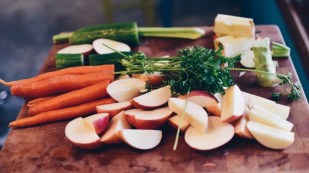
    1. Carrots > peeled and cut into sticks. This will let you either eat them or cut them in to cooking pieces.
    2. Celery > peeled and cut into sticks. This will let you either eat them or cut them in to cooking pieces.
    3. Cucumbers > Peel and halve. Don’t go further than this.
    4. Brussel Sprouts > take off the stalk, wash, halve.
    5. Strawberries > core, meaning take the stalk out and remove the stem.
    6. Broccoli > cut all the florets off of the stem. Break into bite size florets.  Peel the stem, cut into ¼ to ½ inch chips.  Seems weird, but you can easily get addicted to this.
    7. Cauliflower > Couple of things here. Depending upon what you are going to do with your cauliflower dictates how you prep it.  Too much to go into here, search cauliflower on our site to get more info.
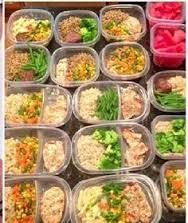
  4. Package all of this stuff in 1 cup servings. For instance, you will have a lot of baggies in the fridge when you are done.  I mean, a lot of baggies.  This way, when you make your lunch, you reach in grab 1 baggie for each 3-4 hour section you will be gone.  8-hour-shift = 3-4 baggies.  Now this is not an exact science here.  Don’t weigh it out or anything, guesstimate.  Guesstimate on the higher side will be better.  Put all of the stuff that does not “fit”, like say you have 1 carrot, 1 cucumber, 3 radishes, 2 mini celery stalks left.  Guess what, chop it up and put it on a salad.
  5. Package dressings into to go packages as well. Depending upon your diet and where you are in the LTL plan, you need to be careful here.  Keep an eye on the ingredients here because it’s easy to get out of hand.  Typically, package about 1/3 cup of something as a dressing to use either on salads, dips or flavor.
  6. Like #5, be careful here as well. Bake off 3 or so pounds of chicken and cut into strips and package into either 2 or 4 ounce servings.  The strips will go well on salads, alone or great into the dips you packaged for #4.
  7. Make 2 extra adult servings of everything you make and immediately package for the next day. Food will keep for about 5 days or so in the fridge.  There will be days when you are too busy to do anything at all and need some quick meals available.  There you go.  If you are on day 4 and have not eaten yet, then take out and freeze.  Majority of dishes, when there is not preservatives or high levels of fats, will freeze well.  The texture will be different, but you would be surprised how things are when you freeze them.  Plus, keep in mind, veggies require coolness to keep well in a lunchbox.  If you grab a frozen dish for your lunch, then it will keep everything cool.
  8. Date everything you prep!! Date everything you prep!! See above point for the main reason.  But you will have a great piece of mind.