Eating for Health, Not for. . .

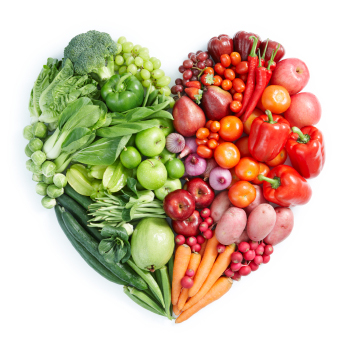
heart shape by various vegetables and fruits

Something that comes up often in conversations with others is goals and accomplishments.  This conversation is a good one to have with yourself, and with someone else you are being accountable to.  We all know that having someone to be accountable to is a great idea and will help you accomplish your goals with your “diet”  (For the record, I hate that word, dieting is a fad, lifestyle change is what we should strive for.)  But for the sake of this article, we will use that horrible, terrible word as a catch-all for what you’re doing.

First, it is not reasonable to expect busy adults to actually count calories or measure out grams of protein or carbs or fats.  If you have time for that, then more power to you.  Most people will not take that kind of time to do that, they will want something that fits into their lives without actually disrupting their lives on such a scale.  Now, that is not to say that you need to just throw caution to the wind and eat whatever you want, but it’s less stressful than you think it is.  Here’s how:

  • Start reducing your fast carbs that do not accomplish anything.  By these I mean the following, and in this order:  White Bread, White Rice, Bleached Grain products (think pastas), White Potatoes, Whole Wheat Bread, Heirloom Grains, Brown Rice, Whole Grain Breads, Whole Grain products (think whole grain pastas), etc.  The reason to remove these and in that order is simple.  White Bread has little to no nutritional value.  They fortify it during the process of making it, prior to the baking process (which basically extracts all the fortified nutrients that they add) and it has little nutritional value.  Basically, if you take a small piece of white bread and chew it up, and then chew it a little longer, you will notice that it will get sweet in your mouth, there is a reason for that.  It’s basically sugar.  Also, if you eat white bread now, switch to wheat bread.  It is not perfect and if you could greatly reduce bread in general, that would be better, but switching from a “white” grain to a colored grain is a start.
  • Increase the colored carbs that you don’t think about.  Vegetables are carbs.  That is true, but the amount of fiber in most vegetables neutralizes the carb load you experience when you eat them.  For example, look at a carrot.  People will scream about the amount of sugars in a carrot, forgetting that it digests so slowly due to the fiber that your insulin response can easily respond in such a way that you do not immediately store it as fat.  Vegetables are also your best source of overall nutrition in your diet.  If you are being encouraged to eat fewer vegetables and you are over the age of 30, you need to question this.  Lettuce, spinach, kale, broccoli, celery and cauliflower are very close to calorie-even when you get down to it.
  • Satiety is the most important factor to a successful food plan, regardless of how complex or simple it is.  If you are hungry all the time, you will stray.  The importance of being able to eat without it feeling like a task is the key.  You can do this by eating protein throughout the day, but more importantly, keep your stomach full and you will be happy.  The easiest way to do this is to drink a lot of water.  I am not saying replace your meals with water, that is crazy.  But if you drink water throughout the day, your stomach will stay full and you will have better success.  Eating vegetables throughout the day is also helpful.  I get funny looks all the time at work for my “garden bin” that stays out at my desk for the whole night.  It is a 1/2 gallon plastic container that I fill with mini-peppers, carrots, celery and whatever.  I snack on it the whole night.
  • Most importantly there is a key thing to remember.  You are going to stray.  You are going to pass up someone who has a container of chocolate covered something or other and have a couple.  Don’t beat yourself up about it.  It is not the end of the world.  Look at everything else you changed in the day.  If you eat a crapload of veggies during the day, your body has already won the battle.

The important thing about what you are doing is that you are consciously trying to increase your health.  Contrary to what articles say the research out there supports health over weight loss.  Firstly, one leads to the other, that is a fact.  If you replace McDonald’s’ with celery, you are going to lose weight.  But more importantly, you are going to have a few positive changes that will occur.  You will get nutrients that your body craves.  You will get the fiber your body craves.

Second, nobody wants to take the time to measure things out and do complex calculations about glycemic index and glycemic load to figure out what the best thing to do is.  An easy way to look at it, taking protein as the example, is this:  If you are not trying to be a body builder in your spare time, you are probably taking in too many carbs and too much protein.  When you look at a chicken breast that you just cooked, there you go.  Not two, not three, not a small bite of another one.  Just that one.  When you are given a choice between the 1/2 pound burger and the 1/3 pound burger, choose the smaller one.  Then don’t put bacon on it.  These are the kind of things that are easy to do.  Sensible even.  Better yet, split it with someone else at the table that way you can get the big burger and add the bacon to it.  Don’t get fries, get a salad.  Don’t drink soda, better yet, drink water.  You have just taken a carby-meat meal of about 1200 calories and changed it to about 450 calories and you did not suffer any kind of loss or denial of what you think you crave.  My wife would kind of chuckle when we went to a steak house because I would order a steak and two house salads.  What?  I like salad and I did not want a potato.  4 years ago, it would have been different, but now, I crave salads.  Simplify things in your “diet” and you will find that you make better food choices.

Third, I will always argue that you should be eating for health and not for any other reason.  There are lots of terrible ideas out there that are there to take money and self-esteem away from people.  If they are eating a food plan that subscribes to a food plan and does not subscribe to a lifestyle change, they are barking up the wrong tree.  If you do not change your habits, change your ideas and change your lifestyle, you will not achieve what you are trying to achieve in your goals for your body.

As always, if you have questions or comments please comment below.  If you need help with these types of choices and decisions, we run an all online class that lasts 12 weeks and starts every 2 weeks.  If you need help, it’s here.
 

Sugar or Not-Sugar (for Health)

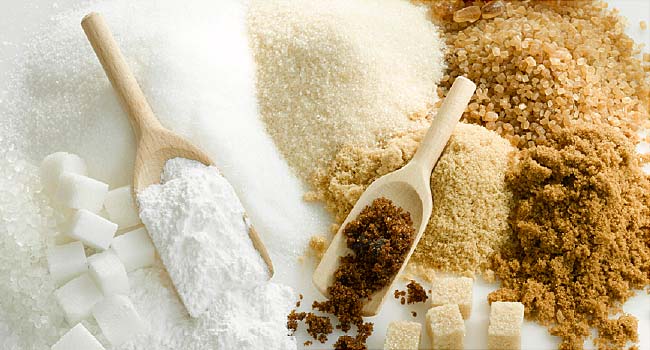
various types of sugar

For the purposes of this , let’s both assume that we are talking about a situation that involves not cutting out sugar.  We both agree that changing your palate to crave less sugary tastes and eliminating excess sugar from your diet will help you achieve any health, fitness or wellness goal.  This is about alternatives when you feel like you cannot avoid it or have to have something sweet.

Calorie-Free Sweeteners

Stevia

Derived from the leaf of a South American shrub, this natural substance is up to 200 times as sweet as sugar. Stevia-based products like Truvia and Pure Via are made from a purified extract of the plant, called rebaudioside A (Reb A), and sugar alcohols.

Pros: It’s a natural sweetener that’s free of artificial chemicals. You also can use stevia in cooking and baking.  There are few negatives to Stevia.

Cons: Although the U.S. Food and Drug Administration (FDA) approved the use of Reb A as a sugar substitute, the whole leaf and crude extracts – sold as supplements in health food stores – have not been approved.  I have to say that although it is classified as a sugar substitute, it is still a natural product that is highly refined into a substance.  Use with caution until all the long-term studies are actually complete.  


Pure Maple Syrup

Boiling down the sap of a maple tree creates this caramel-colored liquid. The sweetener contains about the same amount of calories as sugar – 17 per teaspoon compared with sugar’s 16.

Pros: It contains minerals the body needs, like manganese and zinc.  Plus it’s pretty delightful tasting.  

Cons: Its distinct flavor affects the taste of drinks, dishes and baked goods, and not always in a desired way.

Agave

This liquid sweetener comes from the cactus-like agave plant. Its nectar is processed into syrup, which contains 20 calories per teaspoon.

Pros: Agave is lower on the glycemic index than other sweeteners, which means it doesn’t make blood sugar spike as high. The syrup also has a neutral flavor that works well in drinks and dishes. And because agave is about 50 percent sweeter than sugar, you’ll need less.  But…

Cons: If you’re trying to cut back on processed foods, agave may not be the way to go. With all of that process, it means that it ends up affecting the body in a stronger way than sugar can.  Because of the way that fructose is processed, the amount of Agave that you take in is equivalent to more than the same amount of sugar.  The low glycemic index can be eliminated by the high liver impact that processing fructose can have on the body.  

Honey

Made by bees from the nectar of flowers, honey contains 21 calories per teaspoon.

Pros: Honey is sweeter and thicker than sugar, so people tend to use less of it. It’s also a natural source of antioxidants, and swapping honey for sugar may keep LDL, or “bad,” cholesterol levels from rising, according to a 2009 study in the Journal of Medicinal Food.

Cons: Honey should not be given to babies younger than 12 months because their immune systems aren’t strong enough to fend off potential contaminants in this natural product.  However, when used in cooked foods, the risks of botulism and other components tend to be lessened when the honey is brought to a boiling point of cooked food.  IT has a very distinct flavor that some people find very off-putting.  

Now, the above ones are termed “natural” and I view them as acceptable as far as a substitute goes.  However, use with caution.  I am adding these next two to the list simply to show how horrible they are.  These need to be avoided.  If you must have something sweet using chemicals is not a good idea. 

Aspartame

Found in diet drinks, sugar-free gum and those blue packets, this synthetic sweetener is sold under the brand names Equal and NutraSweet.

Pros: Introduced in 1981, aspartame is one of the most studied sweeteners on the market.  Yay, for research.  

Cons: Heat can break down aspartame, which creates a bitter aftertaste, so avoid cooking with it.  Keep in mind that the chemical breakdown point of aspartame is right at 89 degrees.  So, if you think about it, your body is a higher temperature than that, so it breaks down in the body into its component parts.  Also, aspartame can trigger headaches or stomach discomfort in certain people, in some sensitive people, it can trigger an inflammatory response as well.  This stuff is linked (anecdotally, not confirmed through the short-term studies, long-term studies have been inconclusive).  This stuff is bad.  

Sucralose

Also called Splenda, and sold in yellow packets, it’s made from a chemically tweaked version of sugar that isn’t absorbed by the body. The processed sweetener is used in a bevy of products, such as soft drinks, cereals and baked goods.

Pros: Because sucralose can withstand heat, you can use it for cooking and baking. “It doesn’t provide the same consistency or color as sugar,” says registered dietitian Bethany Thayer, director of the Center for Health Promotion and Disease Prevention at Henry Ford Health System in Detroit. In other words, cookies will turn out thinner and paler.Splenda Sugar Blend, a mixture of sugar and sucralose, may produce better results.

Cons: Although the components in Sucralose can withstand the heat of cooking, it is also true that it can withstand the heat and processes of the body.  So, conversely to Aspartame, it will not break down in the body, for anything.  The substances in sucralose that can breakdown through enzymatic processes have been linked to increased boy pH and inflammation.  Like aspartame, sucralose can lead to headaches, digestive issues and an increased insulin response in the body.  Like Aspartame, I hate this stuff and call it bad.  Don’t Use it.   

So there you go.  There is some information on sweetening food.  Use natural if you have to sweeten things.  I have a preference for honey and maple when it comes to sweeteners.  

How Much Sleep Do You Actually Need?

You know, if you are trying to workout, lose weight, and be healthy this is a huge part of the solution.  A lot of people are struggling with health and the easiest solution is to sleep more.  Ahhh, Sleep.  I saw a post on FB the other day talking about how much each astrologic sign needs to function, and while funny and fun to think about, was clearly full of crap.  I, personally, am a Gemini and it says that I routinely get either 2 hours or 12 hours.  While this is only partially true, it is terrible.  An easy way to denigrate your health is to sleep inconsistently for a long period of time.

Picture this basic anecdotal thought process.  Keep in mind, there is no science in the next few sentences, just logic.  When you are sick, you sleep more.  I do, at least.  I choose to think that I need that extra sleep so that my body can heal itself when I damage it, and it is telling me to take it easy on it for a few days by giving me a cough, congestion and overall crappiness (not a fever, though, if you have a fever, then you are sick.  Exhaustion is not a cause of fever.)  So therefore, I think that if I sleep enough each night, then I am doing that healing as I go, so I get sick less often.

Now, that unscientific thought process is not entirely off base.  Your body does require a certain amount of sleep each night to allow for cell repair, electrolyte movement, calcium absorption and reabsorption, blood replenishment, clotting factor stabilization, and the list goes on.  So, it makes sense that if you do not allow the body to do these things, you will get yourself in trouble.

The CDC and NIH have come up with a sort of cheater’s table for sleep that can be summarized pretty easily in two sentences.  Kids need 10 hours of sleep and Adults need 7-8 hours of sleep, per night.  (the table can be found here if you care)  That is simple enough, right.  Get 7 hours of sleep seems pretty reasonable actually.

So why can’t we do that?  What is going on in our lives that makes it so that we cannot sleep enough.  This is a valuable question for people to ask themselves.  I know, personally, that I work a crazy schedule involving working 3 nights per week and getting up with children early in the morning the other days of the week.  I switch myself back and forth from a day schedule to a night schedule every week. So, what does that do to me.

This causes periods of what is commonly known as micro sleep is a term that easily explains the period of “What?  What just happened?” that occur frequently to people when they do not get enough sleep.  If you have ever read 3/4 of a page in a book and realize that you don’t know what it said and cannot remember it, that is probably what it was.  The common examples are driving and not remembering, dozing at a desk for about 10 seconds, then having ambient noise wake you up, and of course, playing on your phone in bed, and dozing off just long enough to have the screen go black and you have to reswipe in.

So what do we do?  We get more sleep.  We do our best to be in a sleepy place in a sleepy mood and ready for sleep about 7.5 hours before we HAVE to wake up in the morning.  For me, when I do not work, it means that I need to go to bed at 12:00 or so every night, and to be honest, that seems perfectly fine and adult.  When I work, it means that I need to be in bed by 9:30 am or so.  It’s something to shoot for.