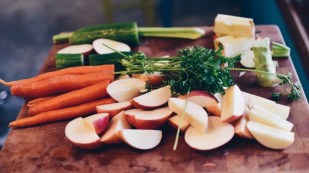
Trophology . . . What??

pexels-photo-41123-mediumTrophology is the study of correct food-combining, that is, the art of knowing which foods go best with which others. Foods can be grouped according to their main constituents as follows:
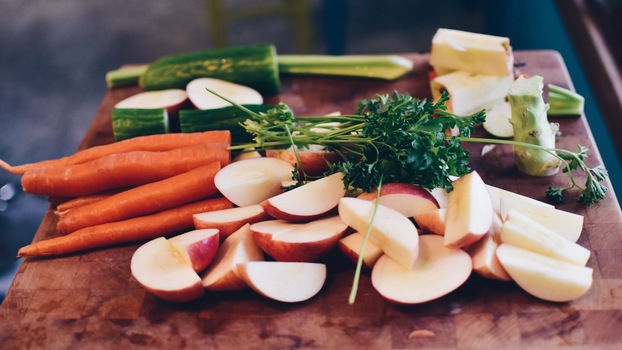
  • Carbohydrates:
    • Starches – rice, millet, pasta, corn, bread, flour, potatoes, bananas, squashes
    • Sugars – cane sugar, honey, malt, syrups, fruits:
    • Acid fruits – tomatoes, citrus (lemons, limes, oranges, pineapples, grapefruits), strawberries, cranberries
    • Sub-acid fruits – melons, apples, pears, peaches, plums, grapes, cherries, raspberries, blackberries
    • Sweet fruits – dried dates, figs, raisins, bananas, prunes, pawpaw
  • Proteins – nuts, seeds, pulses, beans, milk, yoghurt, cheese, fish, meat
  • Fats – peanuts, olives, oils, butter, cream, animal fat
  • Vitamins and Minerals:
    • Vegetables and salads – onions, broccoli, courgettes, peas, carrots, celery, lettuce

The process of digestion has nine basic rules which describe combinations to avoid:

  1. Carbohydrate + Carbohydrate
  2. Carbohydrate + Acid Fruit
  3. Carbohydrate + Protein
  4. Carbohydrate + Sugar
  5. Protein + Acid Fruit
  6. Protein + Protein
  7. Protein + Fat
  8. Melon + any other food
  9. Milk + any other food

Proteins are digested by the enzyme pepsin in the stomach, which only works in the presence of hydrochloric acid (HCl). (Note this is different from the acid in acid fruits, which impede protein digestion.) Different concentrated proteins require secretions of very different digestive juices, so one should only eat one kind of protein (and likewise only one starch) at a time. However, since most foods contain small amounts of protein, we ignore it in combinations, the rules for combining foods applying only to the concentrated starches, sugars, fats and proteins.

Starches, on the other hand, require an alkali medium and the amylase in saliva which contains ptyalin, an enzyme which breaks down starch into maltose. The process continues in the small intestine, where more amylase further breaks down the maltose into simple glucose, fructose and galactose. These are absorbed into the bloodstream, and taken to the liver, which dispenses the energy to whatever cells in the body need it. If there is no immediate requirement, the glucose will be converted to glycogen and stored in the liver, or into fat to be stored in adipose tissue.

So consuming proteins and starches together will result in each being impeded by the other. Similarly, the eating of sugars and acid fruits impede the action of ptyalin and pepsin, reducing the secretion of saliva, and delaying digestion. If insufficient amylase is present in the mouth (due to insufficient chewing, or too much sugar), any starches will not be digested at all in the stomach, instead clogging up the works until amylase in the small intestine can get to work on it.

Fats impede the secretion of digestive juices, and reduce the amount of pepsin and hydrochloric acid, so they should be avoided or used sparingly with protein-rich foods.

Vegetables and salads combine well with all food types.

Acid fruits clash with most things, so are best eaten on their own; melons also, a special case, which should never be combined with other foods. Sub-acid fruits are easier to mix with other types in moderation, but all fruits are digested not in the stomach but the intestine, so will just slow things down (and ferment) until they get there. This is why a purely fruit diet is so beneficial to health (especially when one is ill), there being no starches or proteins to impede the fruits which pass quickly through the stomach to the intestine.

This may all sound contrary to our ‘conventional’ habits, until one realises that the sandwich and the hamburger are modern inventions. However, consider a sliced-lemon sandwich, or melon with millet, or pineapple with almonds, or pasta with potatoes and tortillas, and see how appetising they sound; instinctively upsetting no doubt, although we think nothing of pouring lemon juice on salad to accompany (destroy) our crusty baguette. Milk is best taken alone or left alone.

In Practice…

I tried eating separate meals of proteins and carbohydrates for a while, but found it quite hard to maintain a satisfying diet this way, probably due to years of ingrained eating habits. (Having written this article I shall certainly try some more experiments now I am a bit wiser.) Studies on young children, however, show that given the choice of a wide range of foods of all kinds, at first they try a bit of everything, to find what they like.

Eventually they settled into a pattern of eating only one or two foods at a time, say lots of beetroot, or lots of fish, and ignored sweets in favour of slow-release carbohydrates such as potatoes and rice. If one thinks about our prehistoric hunter-gatherer ancestors, they would probably eat whatever food they found, be it grains or fish or a handful of nuts or fruits.

I think it is important to not get too obsessed with finding the perfect diet straight away, because our needs change throughout our lives and depend on age, climate, exercise and other factors. It takes a lot of experiential study to find what suits you and what you enjoy. Bear these trophological issues in mind, but don’t feel constrained by them. The most important thing is to eat a balanced diet which includes plenty of slow-release carbohydrates from whole-grains, protein from pulses and seeds, fibre from fresh fruit and veg, and little or no sugared or processed food. If you’re wanting to lose weight, then the ideas presented here may be helpful, but really the best way to lose weight is to get plenty of exercise and eat a healthy, balanced diet, as:

A diet rich in fresh fruits and vegetables and plenty of fibre seems to help protect against bowel cancer and there is evidence that a diet containing much meat may increase the risk.


This article was lifted directly from an old article from 2004.  I attempted to get in touch with the original author, but to no avail.  I left the British/Canadien  spellings in it.  I thank Malcolm Smith for this timeless information.
Hot or Sweet, Peppers are amazing!!

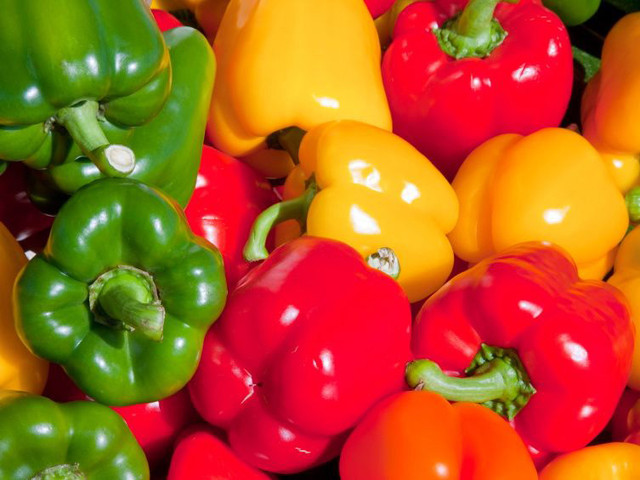
I love peppers.  Specifically the mini peppers that you get at the store that are bite size.  But any size pepper will do nicely, any color as well.  The vibrant colors of peppers are awesome and if you ever have a chance to add them to your pictures, you should.  After all, why do you think that one weird guy from Iron Chef bit into a bright orange pepper.  It was vibrant and looked exotic.  And as we get ready to embark in cleanse land again, I am thinking about foods that I love that make a detox easier and more appealing.  But the appeal of bell peppers goes way beyond their stunning good looks.

First, peppers are low in calories! So, even if you eat one full cup (which is about 8 mini-peppers) you get just about 45 calories. Bonus: that one cup will give you more than your daily allowance of Vitamin A and C!

Second, they contain plenty of vitamin C, a super powerful antioxidant, which powers up your immune system and keeps skin youthful.  The highest amount of Vitamin C in a bell pepper is concentrated in the red variety, but all peppers are loaded with it.

Third, the red bell peppers contain several phytochemicals and carotenoids,  particularly beta-carotene, which lavish you with antioxidant, anti-inflammatory benefits, vision improvement (certain enzymes in bell peppers, such as lutein, protect the eyes from cataracts and macular degeneration later in life), and capsaicin.  The capsaicin in bell peppers has multiple health benefits. Studies show that it reduces ‘bad’ cholesterol, controls diabetes, brings relief from pain and eases inflammation.

Fourth, if cooked for a short period on low heat, bell peppers retain most of their sweet, almost fruity flavor and flavinoid content, which is a powerful nutrient.  The sulfur content (which also tends not to cook out) in bell peppers makes them play a protective role in certain types of cancers.

Fifth, The bell pepper is a good source of Vitamin E, which is known to play a key role in keeping skin and hair looking youthful.  Bell peppers also contain vitamin B6, which is essential for the health of the nervous system and helps renew cells.

So make sure you really love your peppers and include them in your diet as much as you can.  You will be rewarded with both taste and health.

How Much Sleep Do You Actually Need?

You know, if you are trying to workout, lose weight, and be healthy this is a huge part of the solution.  A lot of people are struggling with health and the easiest solution is to sleep more.  Ahhh, Sleep.  I saw a post on FB the other day talking about how much each astrologic sign needs to function, and while funny and fun to think about, was clearly full of crap.  I, personally, am a Gemini and it says that I routinely get either 2 hours or 12 hours.  While this is only partially true, it is terrible.  An easy way to denigrate your health is to sleep inconsistently for a long period of time.

Picture this basic anecdotal thought process.  Keep in mind, there is no science in the next few sentences, just logic.  When you are sick, you sleep more.  I do, at least.  I choose to think that I need that extra sleep so that my body can heal itself when I damage it, and it is telling me to take it easy on it for a few days by giving me a cough, congestion and overall crappiness (not a fever, though, if you have a fever, then you are sick.  Exhaustion is not a cause of fever.)  So therefore, I think that if I sleep enough each night, then I am doing that healing as I go, so I get sick less often.

Now, that unscientific thought process is not entirely off base.  Your body does require a certain amount of sleep each night to allow for cell repair, electrolyte movement, calcium absorption and reabsorption, blood replenishment, clotting factor stabilization, and the list goes on.  So, it makes sense that if you do not allow the body to do these things, you will get yourself in trouble.

The CDC and NIH have come up with a sort of cheater’s table for sleep that can be summarized pretty easily in two sentences.  Kids need 10 hours of sleep and Adults need 7-8 hours of sleep, per night.  (the table can be found here if you care)  That is simple enough, right.  Get 7 hours of sleep seems pretty reasonable actually.

So why can’t we do that?  What is going on in our lives that makes it so that we cannot sleep enough.  This is a valuable question for people to ask themselves.  I know, personally, that I work a crazy schedule involving working 3 nights per week and getting up with children early in the morning the other days of the week.  I switch myself back and forth from a day schedule to a night schedule every week. So, what does that do to me.

This causes periods of what is commonly known as micro sleep is a term that easily explains the period of “What?  What just happened?” that occur frequently to people when they do not get enough sleep.  If you have ever read 3/4 of a page in a book and realize that you don’t know what it said and cannot remember it, that is probably what it was.  The common examples are driving and not remembering, dozing at a desk for about 10 seconds, then having ambient noise wake you up, and of course, playing on your phone in bed, and dozing off just long enough to have the screen go black and you have to reswipe in.

So what do we do?  We get more sleep.  We do our best to be in a sleepy place in a sleepy mood and ready for sleep about 7.5 hours before we HAVE to wake up in the morning.  For me, when I do not work, it means that I need to go to bed at 12:00 or so every night, and to be honest, that seems perfectly fine and adult.  When I work, it means that I need to be in bed by 9:30 am or so.  It’s something to shoot for.


Parmigiano Reggiano

Let’s talk about cheese.  Specifically a very common cheese with lots of benefits and is probably in your fridge or shelf right this moment.  Parmesan.  I could say Parmigiano Reggiano, but I am not fancy so this distinction is not necessary for this.  First, the benefits:

Protein

Your body uses protein to repair and maintain itself. It is a major part of nearly every tissue in your body.  Protein in your blood is one of the things that keeps you hemodynamically stable.  And at times, when you are having fluid imbalances, the solution is to add protein you in the form of IV protein.  A 2-ounce serving of Parmesan cheese contains roughly 20 grams of protein, which can be as high as 41 percent of the daily value, set by the U.S. Food and Drug Administration and based on a 2,000-calorie diet.  Now, 2 ounces of parmesan is roughly 4 tablespoons, keep that in mind when you look at recipes.

Calcium

An article published in the journal, “Clinical Cases in Mineral and Bone Metabolism” in September 2011 notes that numerous studies have established that dietary calcium, along with protein and vitamin D, are essential for achieving peak bone mass and maintaining bone health. Parmesan cheese is easily digested and an excellent source of calcium with a 2-ounce portion containing 671 milligrams, which is more than 67 percent of the DV for this mineral. This cheese also contains small amounts of vitamin D.1

Vitamin A

Vitamin A aids in good vision, particularly in lowered light during the low light periods near sundown.  Sufficient vitamin A also contributes to healthy skin, teeth and body tissue. A 2-ounce serving of Parmesan cheese provides 443IU of vitamin A, which is about 9 percent of the DV

Miscellaneous

Consider this – Parmesan Cheese contains all the goodness of the milk it came from but in a concentrated form.  Approximately 3 gallons of milk are required to make 1 pound of parmesan cheese.  Due to its long ageing, much of the protein in Parmesan has been broken down into peptones, peptides and free amino acids, in effect the protein has been ‘pre-digested’; the protein is readily available and as such it puts very little strain on the metabolism.  Parmesan contains 33% protein compared to 20% in lean beef and that animal protein takes 4 hours to digest while the protein in Parmesan takes just 45 minutes. Other benefits to the digestion include Parmesan’s ability to promote the development of Bacillus Bifidus, which is useful for the maintenance of a healthy gut, and also the fact that there is no lactose present – good news for the lactose intolerant or those with gastrointestinal inflammation.

Nothing is perfect, here are the downsides:

Sodium

A 2-ounce serving of Parmesan cheese contains 780 milligrams of sodium, which is 32.5 percent of the DV.  If you are age 51 or older, African-American, or have high blood pressure, diabetes or chronic kidney disease, you should limit your sodium intake to 1,500 milligrams per day.

Fat

The fat content of cheese often causes alarm to the health conscious but it is important to note that fat is a fundamental part of nutrition. Muscular activity is dependent on fatty acids and, again, because of the changes that occur during the ageing of Parmesan, much of the fat is in the form of short-chain fatty acids, these compounds are absorbed more easily and supply energy very quickly to the body; in fact, they are treated by the body in much the same way as glucosides (sugar). The cholesterol content of Parmesan is only 80 – 85mg/100g, much lower than other full fat cheeses. Exponents of preventative medicine take an unfavorable view of this cholesterol but a daily intake of 300mg is beneficial according to health guidelines so cholesterol should not be seen as a limiting factor in the consumption of Parmesan.

This combination of nutritional benefits explains why in Italy doctors recommend Parmesan to infants and the elderly as well as to athletes.


  1. Pampaloni, B., Bartolini, E., & Brandi, M. (2011). Parmigiano Reggiano cheese and bone health.Clinical Cases in Mineral and Bone Metabolism, VIII(3), 33-36.